A Complete Guide to Choosing the Right Extension Method
Hair extensions are not one-size-fits-all. Each type of extension is designed for a different purpose, lifestyle, hair type, and desired result. Some are temporary and easy to remove, while others are professionally installed for longer-lasting wear.
Understanding the differences between hair extension types can help you choose the best option for your hair goals. Whether you want instant volume, everyday length, natural movement, or a luxury salon transformation, the right method makes all the difference.
In this guide, we’ll break down the key differences between clip-ins, tape-ins, keratin tips, feather wefts, and genius wefts.
Clip-In Hair Extensions
Clip-in hair extensions are temporary extensions that attach to your natural hair using small clips. They are designed to be applied and removed quickly, making them one of the easiest and most flexible extension types available.
Clip-ins are ideal for people who want instant length or volume without committing to a professional installation. They are often used for special events, photoshoots, weddings, nights out, or occasional styling.
The biggest benefit of clip-ins is convenience. You can wear them when you want a fuller look and remove them at the end of the day.
Best for: Temporary styling, instant volume, special occasions, and beginners.
Tape-In Hair Extensions
Tape-in hair extensions are semi-permanent extensions applied using thin adhesive wefts. A small section of natural hair is placed between two tape wefts, creating a flat and seamless attachment.
Tape-ins are popular because they are lightweight, discreet, and relatively quick to install. They work especially well for fine to medium hair because they lay close to the scalp and create a natural-looking finish.
Unlike clip-ins, tape-ins are worn daily for several weeks before needing maintenance. They should be installed and removed by a professional to protect the natural hair.
Best for: Lightweight everyday wear, fine to medium hair, and semi-permanent results.
Keratin Tip Hair Extensions
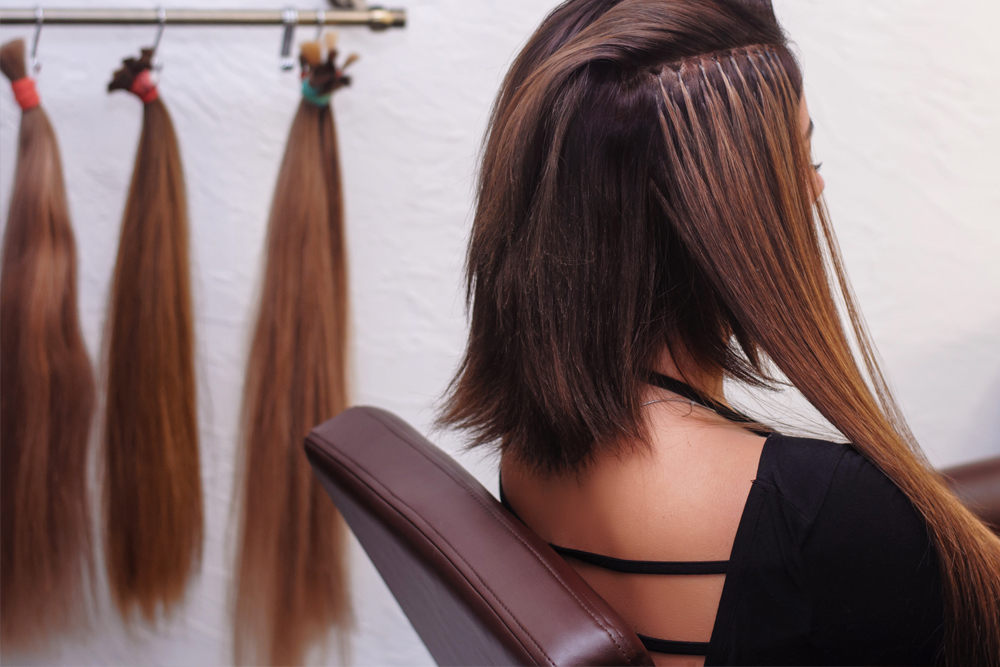
Keratin tip extensions, also called K-tips, are individual strands that are bonded to the natural hair using a keratin-based attachment. This method creates a strand-by-strand result with natural movement and flexibility.
K-tips are one of the most customizable extension methods because each strand is placed individually. This allows stylists to add volume, length, and dimension exactly where needed.
They are best for clients who want a long-lasting professional method and are willing to commit to proper maintenance. K-tips typically require more installation time than tape-ins or clip-ins, but they offer a highly natural finish when applied correctly.
Best for: Long-term wear, natural movement, detailed placement, and premium salon results.
Feather Weft Hair Extensions
Feather weft extensions are lightweight wefts designed to add volume and length without excessive bulk. They are softer and more flexible than many traditional wefts, making them comfortable for professional installs.
Feather wefts are usually applied using salon methods such as beaded rows or sew-in techniques. They can create beautiful fullness while still feeling light and natural.
This method is ideal for clients who want volume but do not want the heavy feeling that can come with bulkier wefts. A professional stylist should customize the placement to ensure comfort and proper blending.
Best for: Lightweight volume, comfortable wear, and soft, natural fullness.
Genius Weft Hair Extensions
Genius weft extensions are an advanced weft method known for their ultra-thin, customizable design. They are made to lay flat against the scalp while still providing fullness and coverage.
One of the biggest differences with genius wefts is that they can be cut to fit the client’s head shape and placement needs without unraveling. This gives stylists more flexibility and allows for a more precise installation.
Genius wefts are ideal for clients who want a premium weft method that feels comfortable, looks seamless, and offers maximum customization. They are especially popular for clients who want fuller hair without a bulky finish.
Best for: Custom weft installs, invisible blending, premium fullness, and professional results.
Temporary vs. Semi-Permanent Extensions
One of the biggest differences between extension types is how long they are meant to be worn.
Clip-ins are temporary and can be removed the same day. They are perfect for people who want flexibility and do not want to commit to daily wear.
Tape-ins, K-tips, feather wefts, and genius wefts are semi-permanent or long-wear methods. These are installed by a stylist and worn continuously for weeks or months depending on the method, care routine, and maintenance schedule.
If you want occasional styling, clip-ins may be the best choice. If you want everyday length or volume, a professional method may be better.
Application Method Differences
Each extension type attaches to the hair differently.
Clip-ins use small clips and do not require salon installation. Tape-ins use adhesive panels. K-tips use keratin bonds applied strand by strand. Feather wefts and genius wefts are typically installed using weft methods such as beaded rows or sew-in techniques.
The application method affects everything — comfort, maintenance, visibility, styling flexibility, and how long the extensions last. That is why choosing the right method for your hair type is so important.
A professional stylist can help determine which attachment method will work best for your natural hair.
Maintenance Differences
Different hair extension types require different levels of maintenance.
Clip-ins are usually the easiest to maintain because they are removed after each use. They do not need salon move-ups, but they should be brushed, stored properly, and washed only when needed.
Tape-ins require professional maintenance because the adhesive panels need to be moved up or replaced as the natural hair grows. K-tips also require professional removal and maintenance because the bonds must be handled carefully.
Feather wefts and genius wefts require regular salon appointments to adjust the rows and keep the install secure, comfortable, and natural-looking.
Which Extension Type Looks the Most Natural?
The most natural-looking extension type depends on your hair type, density, and installation quality.
Tape-ins are very natural for fine to medium hair because they lay flat. K-tips are natural because they move strand by strand. Genius wefts are natural because they are thin, customizable, and designed for a seamless finish.
Clip-ins can also look natural when color matched and placed correctly, but they are usually better for temporary wear. Feather wefts create a natural look when installed with proper placement and enough natural hair to cover the weft.
The most natural result comes from choosing the right method, matching the color and texture, and blending everything properly.
Which Extension Type Is Best for Thin Hair?
Thin hair usually needs extensions that are lightweight and discreet. Tape-ins are often a popular choice because they lay flat and distribute weight across a wider section of hair.
Genius wefts may also work well for thin hair when installed by an experienced stylist. Their ultra-thin design helps reduce bulk and create a more invisible finish.
Clip-ins can work for thin hair if they are lightweight and worn occasionally. Heavy clip-ins or bulky wefts may be harder to hide and can place too much stress on fine hair.
Which Extension Type Is Best for Thick Hair?
Thick hair usually needs enough extension density to blend with the natural hair. Feather wefts, genius wefts, and K-tips are often strong options because they can provide fullness and coverage.
Weft methods are efficient for adding volume across larger sections of hair. K-tips are helpful for detailed blending around layers, face-framing pieces, or areas where more movement is needed.
For thick hair, the key is using enough hair to avoid a disconnected look between the natural hair and the extensions.
Which Extension Type Is Best for Volume?
If your main goal is volume, wefts are often a strong choice. Feather wefts and genius wefts can add fullness efficiently while creating a soft, natural finish.
Tape-ins are also excellent for adding volume, especially for fine to medium hair. They provide a flat, lightweight option that does not feel bulky.
Clip-ins are great for temporary volume because they can be added only when needed. This makes them ideal for events or occasional styling.
Which Extension Type Is Best for Length?
If your main goal is length, most extension types can work depending on your hair. Tape-ins, K-tips, feather wefts, and genius wefts can all create longer hair when installed properly.
K-tips are ideal for natural movement and detailed blending. Wefts are helpful when you need fuller coverage and more dramatic length.
Clip-ins can also add instant length, but they are best for temporary use rather than daily long-term wear.
Comparison Chart: Hair Extension Types
| Extension Type | Wear Type | Application | Best For | Maintenance Level |
|---|---|---|---|---|
| Clip-Ins | Temporary | Clips | Instant volume and length | Low |
| Tape-Ins | Semi-permanent | Adhesive wefts | Flat, seamless blending | Medium |
| K-Tips | Long-wear | Keratin bonds | Natural movement | Medium-high |
| Feather Wefts | Semi-permanent | Weft install | Lightweight volume | Medium-high |
| Genius Wefts | Semi-permanent | Custom weft install | Premium seamless fullness | Medium-high |
How to Choose Between Extension Types
Start by deciding whether you want temporary or long-term extensions. If you only want extensions for events or occasional styling, clip-ins may be the best option.
If you want extensions you can wear every day, consider tape-ins, K-tips, feather wefts, or genius wefts. These methods require professional installation, but they offer longer-lasting results.
Next, consider your hair type. Fine hair usually needs lightweight, flat extensions, while thick hair may need more density and coverage. Your stylist can help match the right method to your hair and goals.
So, What Is the Main Difference Between Hair Extension Types?
The main difference between hair extension types is how they attach, how long they last, how much maintenance they require, and what kind of result they create.
Clip-ins are temporary and flexible. Tape-ins are flat and semi-permanent. K-tips offer strand-by-strand movement. Feather wefts provide lightweight fullness. Genius wefts deliver premium customization with a seamless finish.
The best extension type is the one that fits your hair, lifestyle, and desired result.
Final Thoughts
Understanding the differences between hair extension types makes it easier to choose the right method. Each option has its own benefits, and the best choice depends on what you want your extensions to do.
If you want flexibility, clip-ins are a great start. If you want a long-term transformation, tape-ins, K-tips, feather wefts, or genius wefts may be better options.
The right extensions should blend naturally, feel comfortable, and fit your lifestyle.
Frequently Asked Questions
What are the main types of hair extensions?
The main types include clip-ins, tape-ins, keratin tips, feather wefts, and genius wefts. Clip-ins are temporary, while the others are typically professional methods designed for longer wear. Each type has a different application method, maintenance routine, and best use.
What is the easiest type of hair extension to use?
Clip-in extensions are usually the easiest because they can be applied and removed at home. They do not require glue, tape, heat, or professional installation. This makes them ideal for beginners and occasional wear.
What hair extensions last the longest?
Keratin tips and professional weft methods are often chosen for longer wear. Their longevity depends on installation, maintenance, and hair care routine. Professional removal and upkeep are important for protecting the natural hair.
What is the difference between tape-ins and clip-ins?
Tape-ins are semi-permanent extensions installed with adhesive and worn daily for weeks. Clip-ins are temporary extensions that can be applied and removed whenever needed. Tape-ins are better for everyday wear, while clip-ins are better for flexibility.
What is the difference between feather wefts and genius wefts?
Feather wefts are lightweight, flexible wefts designed for soft volume and comfort. Genius wefts are ultra-thin, customizable wefts that can be cut for precise placement. Both are professional weft methods, but genius wefts offer more customization.
Have Questions? Contact Us Today
Interested in Purchasing Wholesale Hair Extensions? Apply Here
Sources:
- American Academy of Dermatology — How to Prevent Hair Damage from a Weave or Extensions
https://www.aad.org/public/diseases/hair-loss/insider/stop-damage/prevent-hair-damage-weave-extensions - InStyle — Types of Hair Extensions
https://www.instyle.com/hair/hair-extensions-types - Byrdie — Types of Hair Extensions
https://www.byrdie.com/types-of-hair-extensions-4767043 - Real Simple — Different Types of Hair Extensions
https://www.realsimple.com/beauty-fashion/hair/hair-care/types-of-hair-extensions - The Right Hairstyles — Hair Extension Types Guide
https://therighthairstyles.com/hair-extensions-types/